Neuralink in 2026: Where Do We Actually Stand?
More than a dozen people control computers with their thoughts, Blindsight is around the corner, and the biggest questions are still open. The honest status report.
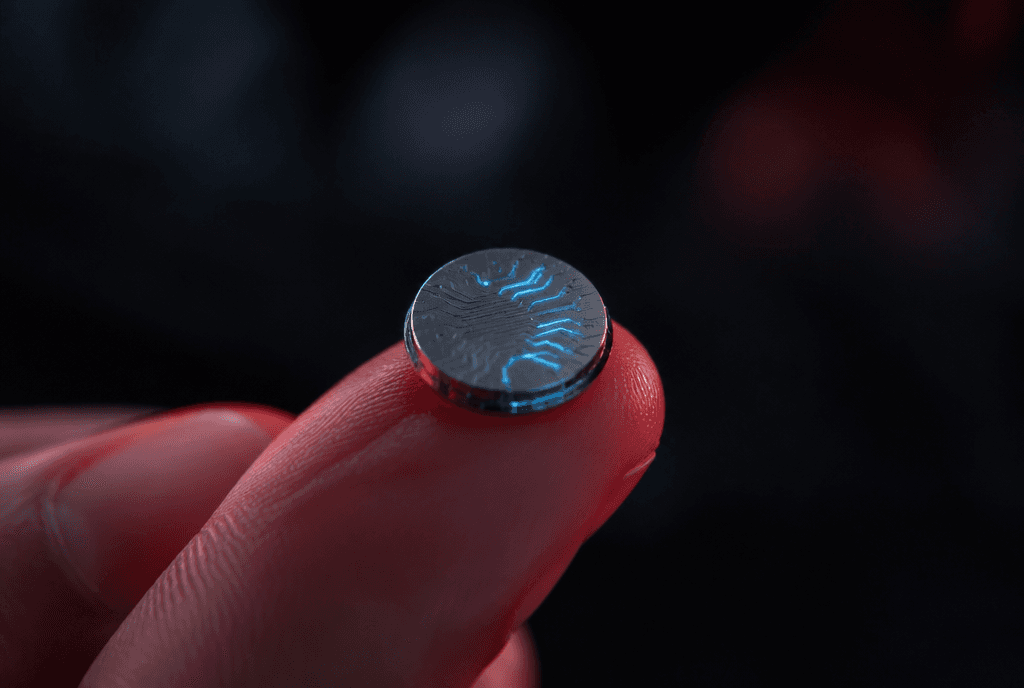
Between "Elon hype" and "devil's work" runs a narrow path where the actual facts live. Let's walk it: what can Neuralink really do today, and what can't it do yet?
What is proven
Since the first human implant in January 2024, the patient count has grown to more than a dozen. The capabilities are documented and partly live-streamed: cursor control by thought, writing, chess, 3D design, working on a computer. Noland Arbaugh, patient number one, describes the implant as the return of his independence, and by now he is no longer the exception but the start of a cohort.
Technically, the N1 remains impressive: over 1,000 electrodes on flexible threads, placed by the R1 surgical robot, completely invisible under the scalp, wireless transmission. Honesty requires the other half too: in the first patient, some electrode threads temporarily retracted. The system stayed usable, but it was a reminder that these are human beings at the leading edge of a very young technology.
What's around the corner
The most exciting project is called Blindsight: an implant in the visual cortex meant to give blind people a coarse field of vision, already designated a "Breakthrough Device" by the FDA. If it works, public perception flips: a device that gives paralyzed people back their computer is impressive. A device that gives blind people back sight is a miracle with a regulatory file number.
Meanwhile, the competition advances on its own paths: Synchron implants through the blood vessels without skull surgery, and research groups decode inner speech at nearly 80 words per minute. The competition is real, and it is good for patients.
What remains open
Three questions will decide the coming years:
- Durability: Will the threads last decades, or will revision surgeries be needed that nobody likes to talk about today?
- Scaling: The path from dozens of trial patients to tens of thousands of treated people has not yet been built, regulatorily or surgically.
- Governance: Who owns the neural data? Who writes the firmware updates? These questions are unresolved, and they don't get smaller as the technology gets better.
The technology is delivering faster than the rules are being written. That is the real headline of 2026.
My take
Neuralink is neither the marketing fairy tale its critics see nor the consumer chip its fans want to pre-order. It is serious medical technology with an openly communicated transhumanist long-term mission. If you want to understand where this leads, the foundations are on the technologies page, and my personal position is in the manifesto.
- Neuralink
- BCI
- Analysis
// Keep reading